
Mastering Digital Literacy: Essential Skills for the U.S. Workforce by 2026
The landscape of the U.S. workforce is undergoing a profound transformation, driven by relentless technological advancements. As we rapidly approach 2026, the demand for robust digital literacy skills is no longer an advantage but a fundamental necessity for professionals across all sectors. This comprehensive guide delves into the critical competencies that will define career readiness and success in the coming years, offering insights for individuals and organizations alike.
The Shifting Sands of the Modern Workplace: Why Digital Literacy Matters More Than Ever
The accelerated pace of digitalization, further intensified by global events, has reshaped how businesses operate, how teams collaborate, and how value is created. Automation, artificial intelligence (AI), cloud computing, and advanced data analytics are no longer niche technologies but integral components of daily work. Consequently, the definition of what it means to be a skilled worker has expanded dramatically. To stay competitive and relevant, U.S. workers must cultivate a diverse set of digital literacy skills that extend beyond basic computer operation.
Understanding the implications of this shift is paramount. Companies are increasingly seeking employees who can not only adapt to new technologies but also leverage them to drive innovation, improve efficiency, and solve complex problems. For individuals, acquiring these skills translates into enhanced job security, greater career mobility, and increased earning potential. Ignoring this trend is akin to navigating a rapidly changing ocean with an outdated map – eventually, you’ll be left behind.
Defining Digital Literacy in the 21st Century
Gone are the days when digital literacy simply meant knowing how to use Microsoft Office. Today, it encompasses a broad spectrum of abilities, including:
- Information Literacy: The ability to find, evaluate, and effectively use digital information.
- Communication and Collaboration: Proficiency in using digital tools for effective communication and teamwork.
- Digital Content Creation: Basic understanding and ability to create and manipulate digital content.
- Safety and Cybersecurity: Knowledge of how to protect personal and organizational data online.
- Problem-Solving and Critical Thinking: Using digital tools to analyze problems and devise solutions.
- Technical Proficiency: Understanding the fundamentals of various digital platforms and software.
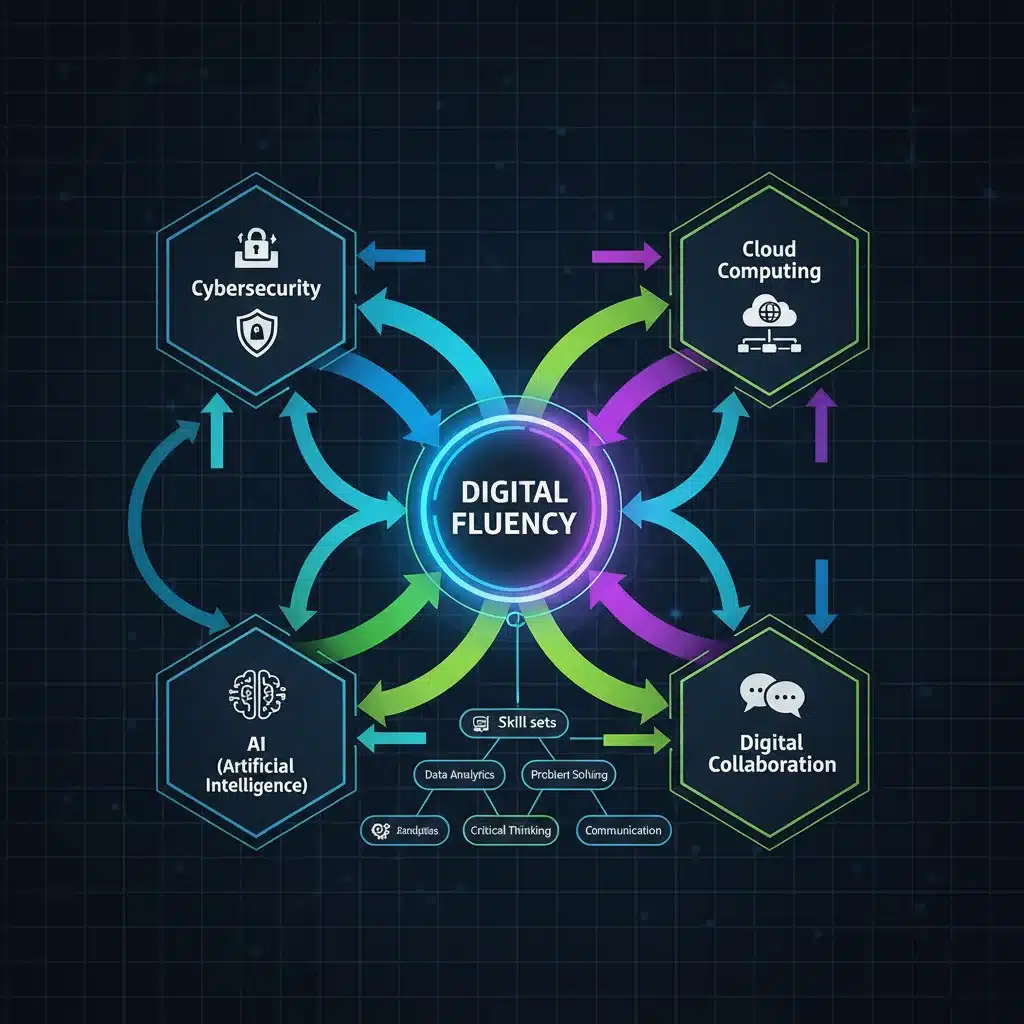
These interconnected skills form the bedrock upon which successful careers will be built in the coming years. Let’s explore the most critical of these in detail, focusing on their relevance for the U.S. workforce by 2026.
Core Digital Literacy Skills for 2026 and Beyond
1. Advanced Data Literacy and Analytics
In an era often dubbed the ‘information age,’ data is the new oil. Every industry, from healthcare to retail, generates vast amounts of data daily. The ability to not just access but truly understand, interpret, and derive actionable insights from this data is a cornerstone of modern digital literacy skills. By 2026, proficiency in data literacy will be expected even in roles traditionally not considered data-intensive.
This skill set involves:
- Data Interpretation: Comprehending charts, graphs, and statistical reports.
- Basic Data Analysis Tools: Familiarity with spreadsheet software (e.g., Excel, Google Sheets) for sorting, filtering, and performing calculations.
- Data Visualization: Creating clear, compelling visual representations of data to communicate findings effectively.
- Understanding Data Ethics: Awareness of privacy concerns, data bias, and responsible data handling.
- Introduction to Business Intelligence (BI) Tools: Basic exposure to platforms like Tableau, Power BI, or Google Data Studio will provide a significant edge.
For example, a marketing professional will need to analyze campaign performance data to optimize ROI, while a healthcare administrator might interpret patient outcome data to improve service delivery. Even frontline workers may need to understand basic metrics related to their performance or operational efficiency. Developing these data-centric digital literacy skills is not just about crunching numbers; it’s about making informed decisions.

2. Cybersecurity Awareness and Digital Safety
With increasing reliance on digital platforms comes an amplified risk of cyber threats. Data breaches, phishing scams, and ransomware attacks are daily occurrences, posing significant threats to individuals and organizations. Consequently, a strong understanding of cybersecurity best practices and digital safety protocols is an indispensable part of digital literacy skills for every U.S. worker.
Key areas include:
- Password Management: Creating strong, unique passwords and using password managers.
- Phishing and Social Engineering Recognition: Identifying and avoiding common cyber scams.
- Data Privacy: Understanding how personal and organizational data is collected, stored, and used.
- Secure Browsing Habits: Recognizing secure websites, understanding browser settings, and using VPNs when necessary.
- Software Updates: Understanding the importance of keeping software and operating systems updated to patch vulnerabilities.
- Reporting Incidents: Knowing the proper channels to report suspicious activities or security breaches within an organization.
Every employee is a potential first line of defense against cyberattacks. Comprehensive cybersecurity training should be a continuous effort, ensuring that these digital literacy skills are not just learned but regularly reinforced and updated to counter evolving threats.
3. Cloud Computing Proficiency
Cloud computing has revolutionized how businesses store data, run applications, and collaborate. Platforms like Amazon Web Services (AWS), Microsoft Azure, and Google Cloud Platform (GCP) are pervasive, and even small businesses leverage cloud-based software as a service (SaaS) solutions for everything from customer relationship management (CRM) to project management.
By 2026, a foundational understanding of cloud concepts will be vital:
- Understanding Cloud Benefits: Knowledge of how cloud services enhance flexibility, scalability, and cost-efficiency.
- Using Cloud-Based Applications: Proficiency with common SaaS tools (e.g., Salesforce, Slack, Zoom, Microsoft 365, Google Workspace).
- Basic Cloud Storage Principles: Understanding how files are stored and shared securely in the cloud.
- Collaboration in the Cloud: Effectively using shared documents, project management tools, and communication platforms hosted in the cloud.
This doesn’t necessarily mean every worker needs to be a cloud architect, but rather that they should be comfortable operating within a cloud-centric ecosystem and understand its implications for their daily tasks. These digital literacy skills enable seamless remote work and distributed team collaboration.
4. Digital Collaboration and Communication Tools
The rise of remote and hybrid work models has made proficiency in digital collaboration and communication tools non-negotiable. Effective use of these platforms facilitates teamwork, streamlines workflows, and maintains productivity across geographical boundaries.
Essential digital literacy skills in this area include:
- Video Conferencing: Mastering platforms like Zoom, Microsoft Teams, or Google Meet, including features like screen sharing, virtual backgrounds, and breakout rooms.
- Instant Messaging/Chat Platforms: Efficient use of Slack, Teams, or similar tools for quick communication and project updates.
- Project Management Software: Familiarity with tools like Asana, Trello, Jira, or Monday.com for task tracking, deadline management, and team coordination.
- Document Collaboration: Co-creating and editing documents in real-time using Google Docs, Microsoft 365, or similar platforms.
- Digital Etiquette: Understanding best practices for professional online communication, respecting time zones, and managing notifications.
These tools are the connective tissue of modern organizations, and employees who can leverage them effectively contribute significantly to collective success. Enhancing these digital literacy skills fosters a more connected and efficient workforce.
5. Artificial Intelligence (AI) and Machine Learning (ML) Fundamentals
AI and ML are rapidly moving from theoretical concepts to practical applications in almost every industry. While not everyone needs to be an AI developer, understanding the basic principles, capabilities, and ethical implications of AI will be crucial for all U.S. workers by 2026.
This includes:
- Understanding AI Applications: Recognizing how AI is used in daily tools (e.g., predictive text, recommendation engines, chatbots).
- Ethical AI Considerations: Awareness of issues like bias in algorithms, data privacy, and the responsible use of AI.
- Interacting with AI Tools: Learning to effectively use AI-powered assistants, content generation tools, or data analysis platforms.
- AI’s Impact on Workflows: Understanding how AI can automate tasks, augment human capabilities, and change job roles.
Employees who grasp the potential of AI can better adapt to new roles, identify opportunities for process improvement, and contribute to strategic discussions about technology adoption. These foundational digital literacy skills will empower workers to thrive alongside AI, rather than fearing its impact.
Developing Your Digital Literacy Skills: A Roadmap for the U.S. Workforce
Acquiring these essential digital literacy skills is an ongoing journey that requires proactive effort. Here’s a roadmap for individuals and organizations to prepare for 2026 and beyond:
For Individuals:
- Self-Assessment: Identify your current skill gaps. Numerous online resources offer free digital literacy assessments.
- Online Courses and Certifications: Platforms like Coursera, edX, LinkedIn Learning, and Udemy offer courses on data analytics, cybersecurity, cloud basics, and specific software. Look for certifications that are recognized in your industry.
- Hands-On Practice: The best way to learn is by doing. Experiment with new software, participate in online collaborative projects, or take on tasks that require new digital tools.
- Stay Informed: Follow tech news, industry blogs, and thought leaders to understand emerging technologies and their impact on your field.
- Networking: Connect with peers and mentors who are digitally savvy. Learning from others’ experiences can accelerate your own development.
- Embrace Lifelong Learning: The digital landscape is constantly evolving. Cultivate a mindset of continuous learning and adaptation.
For Organizations:
- Invest in Training Programs: Develop comprehensive training initiatives tailored to different departmental needs. These should cover foundational digital literacy skills as well as advanced, role-specific competencies.
- Foster a Culture of Learning: Encourage employees to explore new technologies and provide resources and time for professional development.
- Provide Access to Tools: Ensure employees have access to the latest software and platforms necessary for their roles.
- Leadership Buy-In: Digital transformation starts at the top. Leaders must champion digital literacy and demonstrate its importance.
- Measure and Adapt: Regularly assess the digital skill levels of your workforce and adjust training programs to meet evolving needs.
- Create Internal Mentorship Programs: Pair digitally proficient employees with those who need to upskill, fostering peer-to-peer learning.
The Economic Imperative of Digital Literacy
Beyond individual career growth, a digitally literate workforce is an economic imperative for the U.S. According to various reports from organizations like the World Economic Forum and McKinsey, economies with higher levels of digital proficiency tend to be more productive, innovative, and resilient. A workforce equipped with robust digital literacy skills can drive national competitiveness, foster entrepreneurship, and attract foreign investment.
The ability to adapt to new technologies quickly also means that businesses can pivot more effectively in response to market changes, ensuring continuity and growth. Furthermore, it helps close the digital divide, ensuring that a broader segment of the population can participate in the modern economy, leading to more equitable growth and opportunity. The economic benefits ripple through society, from increased GDP to higher wages and improved quality of life.
Addressing the Digital Divide
It’s important to acknowledge that access to digital tools and training is not uniform across all demographics and regions in the U.S. Bridging this digital divide is crucial for ensuring that the benefits of a digitally literate workforce are shared equitably. Initiatives from government, educational institutions, and non-profits are vital in providing access to internet, devices, and training for underserved communities. Focusing on inclusive policies that promote digital literacy skills for everyone will strengthen the entire workforce.
Conclusion: Future-Proofing Your Career with Digital Literacy
The year 2026 is not far off, and the demands on the U.S. workforce are clear. Embracing and mastering essential digital literacy skills is no longer optional; it is fundamental to navigating the complexities and seizing the opportunities of the modern economy. From understanding data and safeguarding against cyber threats to collaborating effectively in the cloud and comprehending the basics of AI, these competencies will define the successful professional.
For individuals, this means committing to continuous learning, actively seeking out training, and practicing new tools. For organizations, it means investing in their people, fostering a culture of innovation, and strategically integrating digital upskilling into their core business strategy. By prioritizing the development of these critical digital literacy skills, the U.S. workforce can not only adapt to the future but actively shape it, ensuring prosperity and resilience for years to come.