Online Learning Platforms: 2025 Trends for Skill Development

The latest trends in online learning platforms for 2025 are fundamentally transforming lifelong skill development, emphasizing adaptive learning paths, enhanced interactivity, and accessible, high-quality educational content to meet the demands of a dynamic global workforce.
The world of education is undergoing a profound transformation, with online learning trends rapidly evolving. As we approach 2025, the landscape of digital education is set to deliver more personalized, accessible, and effective ways for individuals to acquire and refine skills throughout their lives. This shift isn’t just about convenience; it’s about fundamentally rethinking how we learn and adapt in an ever-changing professional environment.
The Rise of Personalized Learning Paths
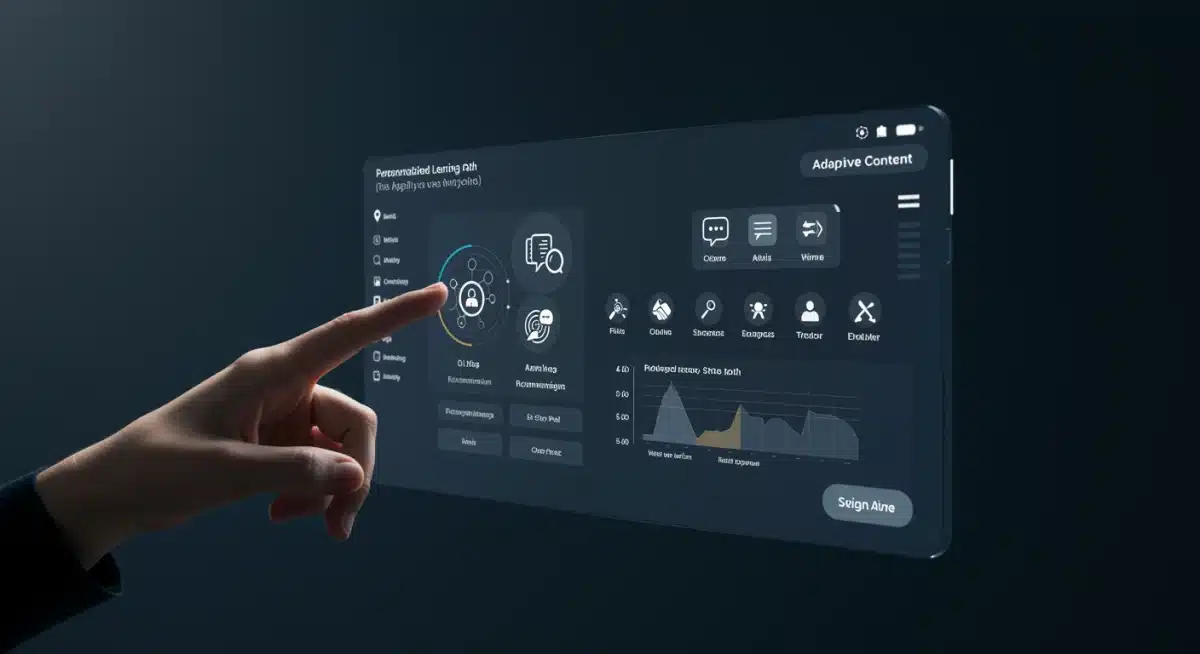
Personalized learning is no longer a niche concept but a cornerstone of modern online education. By 2025, online learning platforms are expected to offer highly tailored educational experiences, adapting to individual learning styles, paces, and career goals. This approach moves beyond a one-size-fits-all model, recognizing that effective learning is deeply personal.
Artificial intelligence (AI) and machine learning (ML) are the primary drivers behind these personalized paths. These technologies analyze learner data, identify strengths and weaknesses, and recommend specific content, exercises, and projects. This ensures that every learner receives the most relevant and impactful educational journey, maximizing their potential for skill acquisition and retention.
AI-Driven Curriculum Customization
AI algorithms are becoming increasingly sophisticated in their ability to curate content. They can pull from vast libraries of resources to assemble a curriculum that directly addresses a learner’s needs and objectives.
- Adaptive content delivery based on real-time performance.
- Personalized skill gaps analysis and targeted remediation.
- Dynamic adjustments to learning pace and difficulty.
- Recommendations for complementary courses and resources.
This level of customization not only enhances engagement but also significantly improves learning outcomes. Learners feel more invested when the content directly pertains to their aspirations, leading to higher completion rates and more profound skill mastery. The future of online learning is undeniably shaped by this intelligent, adaptive personalization.
In conclusion, personalized learning paths, powered by advanced AI, are revolutionizing how individuals engage with educational content. This evolution promises a more efficient and effective learning experience, directly addressing the unique needs of each student and fostering genuine lifelong skill development.
Immersive Learning Experiences: VR and AR Integration
As technology advances, so does our ability to create engaging and effective learning environments. Virtual Reality (VR) and Augmented Reality (AR) are poised to transform online learning platforms by offering immersive experiences that transcend traditional video lectures and text-based modules. These technologies can transport learners into simulated environments, making abstract concepts tangible and practical skills more accessible.
Imagine medical students performing virtual surgeries, engineering students designing and testing structures in a digital sandbox, or history enthusiasts exploring ancient civilizations firsthand. VR and AR offer unparalleled opportunities for experiential learning, providing a safe and controlled space to practice complex skills and apply theoretical knowledge. This hands-on approach is invaluable for developing proficiency in fields that traditionally require physical presence.
Practical Applications in Skill Development
The integration of VR and AR into online learning platforms extends far beyond novelty. It offers concrete advantages for skill development across various industries.
- Healthcare: Virtual simulations for surgical training, patient interaction, and diagnostic procedures.
- Engineering: Augmented reality overlays for complex machinery maintenance and design visualization.
- Vocational Training: Immersive scenarios for safely practicing dangerous tasks or complex operational procedures.
- Language Learning: VR environments for practicing conversations with AI characters in realistic settings.
These immersive tools reduce the need for expensive physical equipment and provide unlimited opportunities for practice and repetition, crucial for skill mastery. The feedback loops within these environments can be instantaneous, allowing learners to correct mistakes and refine techniques in real-time, accelerating their learning curve.
Furthermore, the gamification elements often inherent in VR/AR experiences boost motivation and engagement. Learners are more likely to persist with challenging material when it feels like an interactive game rather than a tedious task. This blend of education and entertainment is a powerful combination for fostering lifelong learning habits.
In summary, VR and AR are set to revolutionize online learning by providing deeply immersive and interactive experiences. These technologies will enable learners to practice skills in realistic, consequence-free environments, significantly enhancing practical application and retention.
Microlearning and Skill Stacking for Agility
In an era of rapid technological change, the demand for continuous skill development is paramount. Microlearning, characterized by short, focused learning modules, is emerging as a critical trend in online education for 2025. This approach caters to the modern learner’s busy schedule and shorter attention spans, offering bite-sized content that can be consumed quickly and efficiently.
Complementing microlearning is the concept of skill stacking, where individuals acquire a series of specialized, complementary skills to create a unique and valuable professional profile. Instead of pursuing lengthy, generalized degrees, learners can focus on mastering specific competencies that are directly applicable to their career goals. This agile approach to learning allows individuals to quickly adapt to new industry demands and remain competitive in the job market.
Benefits of Microlearning Modules
Microlearning offers several distinct advantages that make it ideal for lifelong skill development:
- Time Efficiency: Modules can be completed in minutes, fitting easily into breaks or commutes.
- Focused Content: Each module targets a single learning objective, preventing cognitive overload.
- Higher Retention: Shorter, more frequent learning sessions can lead to better memory recall.
- Just-in-Time Learning: Access to specific information exactly when it’s needed for a task or project.
This method is particularly effective for busy professionals who need to continually update their skill sets without committing to extensive, time-consuming courses. Online learning platforms are increasingly designing their content in modular formats, allowing learners to pick and choose the exact skills they wish to develop.
Skill stacking empowers individuals to become specialists in niche areas, combining diverse competencies to create unique value. For example, a marketing professional might stack skills in data analytics, content creation, and social media advertising to become a highly sought-after digital strategist. This strategic approach to learning fosters adaptability and resilience in a dynamic professional landscape.
Ultimately, microlearning and skill stacking represent a pragmatic shift in how we approach education. They prioritize flexibility, efficiency, and direct applicability, enabling learners to build and refine relevant skill sets with unprecedented agility, crucial for thriving in 2025 and beyond.
The Integration of AI Tutors and Mentors
The role of artificial intelligence in online learning platforms is expanding beyond content customization to include direct interaction with learners. By 2025, AI tutors and mentors are expected to become commonplace, providing personalized support, feedback, and guidance. These AI entities can offer a level of individualized attention that would be impossible for human instructors to provide at scale.
AI tutors can answer questions, explain complex concepts, and even engage in Socratic dialogue to deepen understanding. They can identify when a learner is struggling and offer immediate, targeted interventions, preventing frustration and disengagement. This real-time, adaptive support ensures that learners receive assistance precisely when and where they need it most, mimicking the benefits of a dedicated human tutor.
Enhanced Learning Support
The capabilities of AI tutors and mentors are diverse and constantly evolving:
- Instant Feedback: Provide immediate feedback on assignments, quizzes, and practice exercises.
- Concept Explanation: Offer alternative explanations or analogies for difficult topics.
- Progress Tracking: Monitor performance and suggest areas for improvement.
- Motivational Support: Deliver encouraging messages and celebrate achievements.
Beyond academic support, AI mentors can also provide career guidance, recommending courses or skill paths based on current market trends and the learner’s aspirations. They can help individuals navigate the complexities of career development, offering insights into emerging fields and in-demand skills. This holistic support system transforms the online learning experience into a more comprehensive journey.
The development of natural language processing (NLP) and generative AI has made these interactions feel increasingly natural and intuitive. Learners can communicate with AI tutors using conversational language, making the experience less like interacting with a machine and more like engaging with a knowledgeable assistant. This human-like interaction enhances comfort and reduces the intimidation factor often associated with traditional learning environments.
To summarize, AI tutors and mentors are set to become integral components of online learning platforms. They will offer unprecedented levels of personalized support, feedback, and guidance, making education more accessible and effective for diverse learners seeking lifelong skill development.
Blockchain for Credentialing and Trust
In the digital age, verifying skills and credentials acquired through online learning can be a complex process. Blockchain technology is emerging as a powerful solution to this challenge, promising to revolutionize how educational achievements are recorded, verified, and shared. By 2025, online learning platforms are expected to increasingly leverage blockchain for secure and transparent credentialing, enhancing trust and portability of qualifications.
Blockchain creates an immutable, decentralized ledger where educational achievements can be stored. This means that once a certificate, badge, or degree is issued and recorded on the blockchain, it cannot be altered or falsified. Employers, institutions, and individuals can instantly verify the authenticity of credentials, eliminating the need for lengthy verification processes and combating credential fraud. This level of trust is critical for the credibility of online education.
Secure and Verifiable Digital Credentials
The application of blockchain in online learning offers several key advantages for credentialing:
- Immutability: Records cannot be changed or deleted, ensuring the integrity of achievements.
- Decentralization: No single entity controls the data, reducing the risk of censorship or single points of failure.
- Transparency: Verified credentials are publicly accessible (with appropriate privacy controls), making them easy to confirm.
- Portability: Learners own their digital credentials, which can be easily shared across platforms and with potential employers.
This shift empowers learners by giving them full control over their educational records. They can manage their digital portfolio of skills and share it with confidence, knowing that the authenticity is guaranteed by blockchain technology. For employers, it streamlines the hiring process, allowing for quick and reliable verification of a candidate’s qualifications, ensuring they possess the skills they claim.
Furthermore, blockchain can facilitate the issuance of micro-credentials and digital badges for individual skills, not just full degrees. This aligns perfectly with the trend of skill stacking, allowing learners to build a granular, verifiable record of their competencies. As the demand for specific, verifiable skills grows, blockchain will play a crucial role in validating these achievements within the online learning ecosystem.
In essence, blockchain technology is set to enhance the trustworthiness and portability of online educational credentials. By providing a secure, transparent, and immutable record of achievements, it will empower learners and instill greater confidence in the value of online skill development.
Community-Driven Learning and Collaborative Platforms
While online learning often conjures images of solitary study, the trend for 2025 emphasizes community and collaboration. Modern online learning platforms are increasingly designed to foster interaction, peer-to-peer learning, and a strong sense of belonging among students. This shift recognizes that learning is often a social process, and collaboration can significantly enhance understanding and motivation.
These platforms incorporate features like discussion forums, virtual study groups, peer review systems, and collaborative project spaces. Learners can connect with peers from around the world, share insights, solve problems together, and even mentor one another. This global connectivity enriches the learning experience, exposing students to diverse perspectives and fostering valuable networking opportunities.
Key Features of Collaborative Platforms
Community-driven online learning environments offer a wealth of features designed to promote interaction:
- Interactive Forums: Dedicated spaces for questions, discussions, and resource sharing.
- Virtual Classrooms: Live sessions with instructors and peers for real-time engagement.
- Collaborative Projects: Tools for group work, document sharing, and joint problem-solving.
- Peer Mentorship Programs: Structured opportunities for more experienced learners to guide newcomers.
The benefits extend beyond academic support. Building a strong learning community can combat feelings of isolation that some online learners experience. It provides a support network, encourages accountability, and creates a sense of shared purpose. Learners feel more connected to their studies and are more likely to persist when they are part of a vibrant, active community.
Moreover, collaborative learning often mirrors real-world professional environments, where teamwork and communication are essential skills. By engaging in group projects and discussions, learners develop crucial soft skills that are highly valued by employers, such as critical thinking, problem-solving, and effective communication. This holistic approach prepares individuals not just with technical knowledge but with the interpersonal skills needed to thrive.
Ultimately, community-driven learning and collaborative platforms are reshaping the online educational landscape. By prioritizing interaction and peer engagement, these platforms create richer, more supportive, and more effective learning environments for lifelong skill development.
Adaptive Assessment and Skill Validation
Traditional assessment methods often fall short in truly measuring skill proficiency in dynamic fields. By 2025, online learning platforms will increasingly adopt adaptive assessment tools that go beyond rote memorization, focusing instead on practical application and real-world problem-solving. These assessments dynamically adjust to a learner’s responses, providing a more accurate and nuanced evaluation of their capabilities.
This means that instead of static quizzes, learners might encounter simulations, case studies, or project-based assignments that require them to demonstrate their skills in a realistic context. AI plays a crucial role here, analyzing performance, identifying areas of mastery and areas needing further development, and providing targeted feedback. The goal is not just to test knowledge but to validate the practical application of skills.
Innovative Assessment Techniques
Adaptive assessment methods are evolving to provide comprehensive skill validation:
- Performance-Based Tasks: Assessments that require learners to perform actual tasks or solve simulated problems.
- AI-Powered Feedback: Instant, detailed feedback on performance, highlighting strengths and suggesting improvements.
- Gamified Assessments: Integrating game elements to make evaluations more engaging and less stressful.
- Portfolio-Based Evaluations: Allowing learners to showcase a collection of their work and projects.
These innovative approaches move away from high-stakes, single-point assessments towards a continuous evaluation model. Learners receive ongoing feedback, allowing them to refine their skills iteratively. This process not only validates their current competencies but also guides their future learning path, ensuring continuous improvement and relevance in their chosen fields.
Furthermore, adaptive assessment is closely linked to the concept of micro-credentials and skill badges. As learners demonstrate mastery in specific, granular skills, they can earn verifiable digital badges that attest to their competencies. This provides a detailed record of their capabilities, which is highly valuable in a job market that increasingly values specific skills over broad degrees.
In conclusion, adaptive assessment and skill validation are transforming how learning outcomes are measured. By focusing on practical application, providing dynamic feedback, and leveraging AI, these methods ensure that online learning platforms effectively equip individuals with verifiable, job-ready skills for lifelong success.
| Key Trend | Impact on Skill Development |
|---|---|
| Personalized Learning | Tailored paths maximize engagement and learning efficiency. |
| Immersive Technologies | VR/AR offers hands-on practice in realistic simulations. |
| Microlearning & Skill Stacking | Enables agile, targeted acquisition of specific, in-demand skills. |
| AI Tutors & Mentors | Provides instant, personalized support and career guidance. |
Frequently Asked Questions About Online Learning Trends
By 2025, AI will analyze your learning style, pace, and performance to create highly customized content paths. It will recommend specific modules, projects, and resources, and adjust difficulty in real-time, ensuring the most effective and engaging educational journey tailored just for you.
VR and AR will offer immersive, hands-on learning experiences. Imagine virtual labs, simulated surgeries, or historical recreations. These technologies will allow learners to practice complex skills in safe, realistic environments, making abstract concepts tangible and enhancing practical application.
Microlearning delivers bite-sized, focused content, ideal for busy schedules and shorter attention spans. It allows for just-in-time learning, higher retention rates, and the efficient acquisition of specific skills, enabling professionals to quickly adapt to new industry demands and skill gaps.
Blockchain technology will provide secure, immutable records of educational achievements. This means digital certificates and badges cannot be falsified and can be instantly verified by employers or institutions, boosting credibility and making online qualifications more trustworthy and portable globally.
Absolutely. Future platforms emphasize community-driven learning through forums, virtual study groups, and collaborative projects. This fosters peer-to-peer interaction, diverse perspectives, and the development of crucial soft skills like teamwork and communication, combating isolation and enriching the overall learning experience.
Conclusion
The trajectory of online learning platforms towards 2025 reveals a dynamic and transformative landscape. From hyper-personalized AI-driven curricula and immersive VR/AR experiences to agile microlearning and secure blockchain credentialing, the future of education is being redefined. These innovations are not merely technological advancements; they represent a fundamental shift in how we approach lifelong skill development, making learning more accessible, engaging, and directly relevant to the demands of a rapidly evolving global workforce. Embracing these trends will empower individuals to continuously adapt, acquire new competencies, and thrive in an increasingly complex world, solidifying online learning’s role as an indispensable tool for personal and professional growth.