Accelerated Bachelor’s Degree: Earn Your Degree in Under 3 Years in the U.S. by 2026

In an increasingly competitive global landscape, the traditional four-year bachelor’s degree is no longer the only pathway to success. A significant shift is underway in higher education, with more students and institutions embracing accelerated learning models. By 2026, earning an accelerated bachelor’s degree in under three years in the U.S. is not just an aspiration but a tangible reality for a growing number of ambitious students. This comprehensive guide delves into the mechanisms, benefits, challenges, and strategic approaches to fast-track your way to a bachelor’s degree, positioning you for a head start in your career or further academic pursuits.
The Rise of the Accelerated Bachelor’s Degree
The concept of an accelerated bachelor’s degree is gaining significant traction for several compelling reasons. The rising cost of tuition, the desire to enter the workforce sooner, and the increasing flexibility offered by online and hybrid learning models are all contributing factors. For many, the prospect of saving a year or more on tuition, living expenses, and lost income is a powerful motivator. Universities, in turn, are responding by designing innovative programs that maintain academic rigor while optimizing the time to completion.
Historically, the four-year degree was a standard based on a combination of academic tradition and administrative convenience. However, with advances in educational technology and a deeper understanding of learning methodologies, institutions are realizing that this timeframe isn’t always necessary for every student or every field of study. The focus is shifting from seat time to learning outcomes, allowing students who can demonstrate mastery of content to progress more quickly.
Understanding the "Under 3 Years" Model
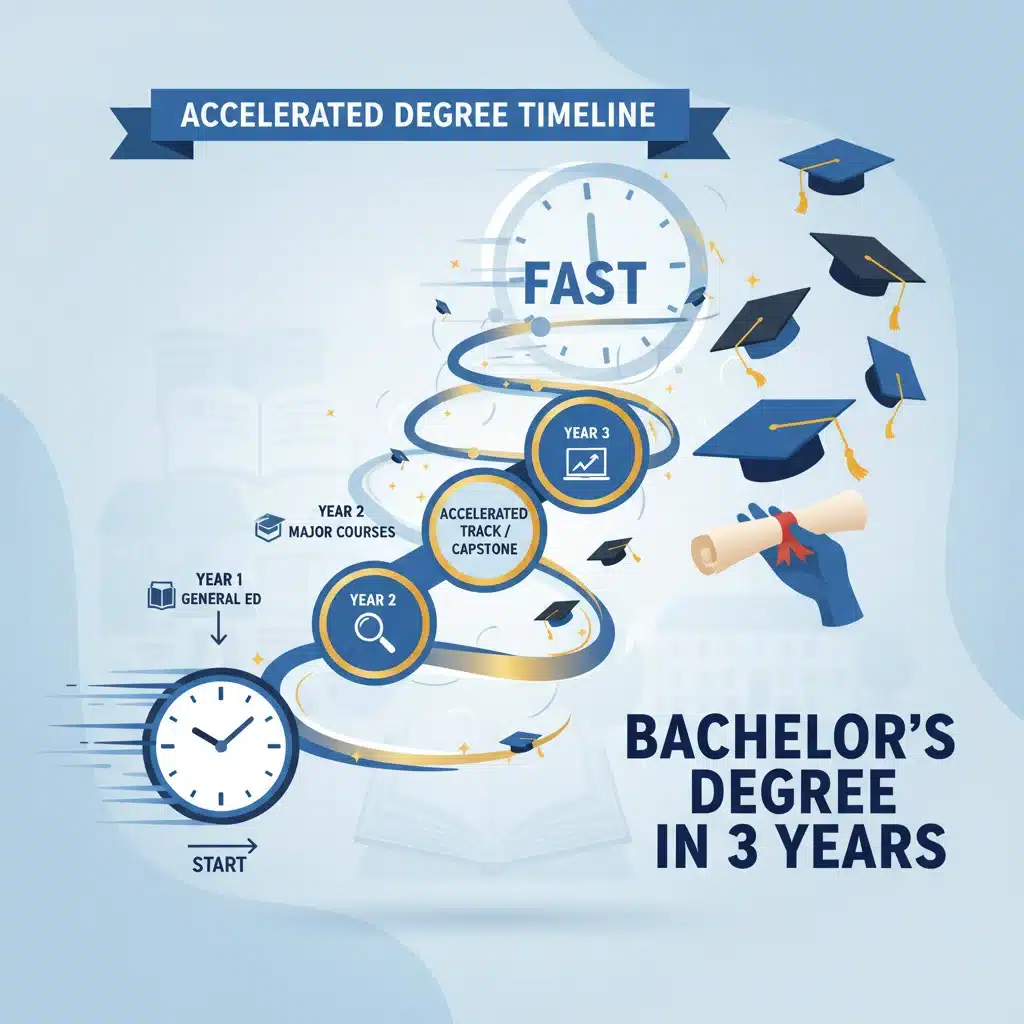
When we talk about an accelerated bachelor’s degree in under three years, we’re typically referring to programs that condense the standard 120-credit curriculum into a shorter timeframe. This can be achieved through various methods, including:
- Increased Course Load: Students take more credits per semester or trimester than traditional students.
- Summer and Winter Sessions: Utilizing academic breaks to take additional courses, thereby continuing studies year-round.
- Prior Learning Assessment (PLA): Earning college credit for knowledge gained through work experience, military service, or independent study.
- Dual Enrollment/AP/IB Credits: Entering college with a significant number of credits already earned during high school.
- Competency-Based Education (CBE): Progressing through a program based on demonstrating mastery of specific competencies rather than fixed course schedules.
- Integrated Programs: Some institutions offer programs that combine a bachelor’s and master’s degree, where the undergraduate portion is completed in a condensed timeline.
The "under 3 years" benchmark is ambitious but entirely achievable with careful planning and dedication. It requires a proactive approach from students and a supportive, well-structured program from the institution.
Pathways to an Accelerated Bachelor’s Degree
Several distinct pathways can lead to an accelerated bachelor’s degree. Understanding these options is crucial for prospective students to choose the most suitable route for their individual circumstances and academic goals.
1. Intensive Full-Time Programs
Many universities offer structured programs designed specifically for accelerated completion. These often involve a heavier course load per semester, mandatory summer sessions, and sometimes a more focused curriculum with fewer electives. Students in these programs commit to a rigorous academic schedule, often attending classes year-round. Examples include:
- 3-Year Bachelor’s Degrees: Some institutions have explicitly designed three-year bachelor’s degree programs, often in specific fields like business, liberal arts, or certain sciences. These programs meticulously plan out every course to ensure all requirements are met within the condensed timeframe.
- Year-Round Study: Students enroll in fall, spring, and summer semesters, effectively eliminating traditional academic breaks. This continuous learning model allows for the accumulation of credits at a much faster pace.
2. Credit for Prior Learning (CPL) and Examinations
One of the most effective ways to accelerate a degree is by entering college with a substantial number of credits already earned. This pathway is particularly beneficial for non-traditional students or those who excelled in high school.
- Advanced Placement (AP) and International Baccalaureate (IB) Programs: High school students who score well on AP or IB exams can often transfer these credits directly to their chosen university, fulfilling general education requirements or even some introductory major courses.
- CLEP (College-Level Examination Program) Exams: CLEP exams allow individuals to earn college credit by demonstrating knowledge in various subjects. These are widely accepted by thousands of colleges and universities.
- DSST (DANTES Subject Standardized Tests): Similar to CLEP, DSST exams offer college credit for prior learning, often utilized by military personnel but available to civilians as well.
- Portfolio Assessment: Some institutions evaluate a student’s prior work experience, professional training, or independent study through a portfolio review process, awarding college credit for demonstrated competencies.
3. Online and Hybrid Programs
The flexibility of online and hybrid learning environments has revolutionized accelerated degree options. These formats often allow students to:
- Self-Pace Learning: While not always "self-paced" in the strictest sense, many online programs offer asynchronous courses that allow students to complete assignments and engage with material on their own schedule, potentially speeding up their progress if they can dedicate more time.
- Enroll in More Courses: Without the constraints of physical class attendance, some online students can manage a heavier course load more effectively.
- Access Programs from Anywhere: Online programs remove geographical barriers, allowing students to enroll in accelerated programs offered by institutions across the country.
4. Competency-Based Education (CBE)
CBE is a relatively newer model that is perfectly suited for an accelerated bachelor’s degree. Instead of traditional credit hours and semesters, CBE programs focus on a student’s ability to demonstrate mastery of specific competencies or learning outcomes. Students progress at their own pace, moving quickly through material they already know and spending more time on areas where they need to develop skills. This model is particularly attractive to adult learners with significant prior knowledge or work experience.
Benefits of an Accelerated Bachelor’s Degree
The advantages of pursuing an accelerated bachelor’s degree are numerous and can significantly impact a student’s financial future and career trajectory.
1. Reduced Cost of Education
One of the most immediate and tangible benefits is cost savings. By completing a degree in less time, students save on:
- Tuition: Fewer semesters mean fewer tuition payments. While some accelerated programs might have a slightly higher per-semester cost, the overall reduction in semesters typically leads to substantial savings.
- Living Expenses: For students attending on-campus programs, each year saved means a year less paying for room, board, and other associated living costs. Even for those living at home, the reduction in the total duration of study translates to fewer years of foregone earnings.
- Student Loan Interest: Less time in school often means less money borrowed, and consequently, less interest accrued on student loans.
2. Earlier Entry into the Workforce
Graduating sooner means starting your career earlier. This provides several advantages:
- Head Start on Earning Potential: You begin earning a professional salary sooner, accumulating wealth and experience while your peers are still in school.
- Faster Career Progression: Earlier entry allows for more years of professional experience, potentially leading to faster promotions and career advancement.
- Reduced Opportunity Cost: The "cost" of being in school is not just tuition; it’s also the income you could have earned. Accelerating your degree reduces this opportunity cost.
3. Increased Motivation and Focus
The demanding nature of an accelerated bachelor’s degree program can foster a strong sense of motivation and discipline. Knowing that the finish line is closer can help students stay focused and committed to their studies. The fast pace can also prevent academic complacency and encourage active learning.
4. Competitive Edge in the Job Market
Graduating with an accelerated bachelor’s degree can be a unique selling point on a resume. It demonstrates initiative, efficiency, and the ability to handle a rigorous workload – qualities highly valued by employers. It can also give graduates a head start in competitive fields where early entry can make a significant difference.
5. Flexibility for Further Education
For those planning to pursue graduate studies (e.g., a master’s, Ph.D., or professional degree), completing an undergraduate degree early allows for a smoother transition to advanced programs. It can free up time to gain relevant work experience, prepare for graduate entrance exams, or even start a master’s degree sooner, further accelerating their overall educational journey.
Challenges and Considerations for Accelerated Programs
While the benefits are compelling, pursuing an accelerated bachelor’s degree is not without its challenges. Prospective students must be realistic about the demands of such programs.
1. Intense Academic Rigor
The most significant challenge is the increased academic workload. Students in accelerated programs often take more courses per term, with less time for breaks. This requires strong time management skills, self-discipline, and a high tolerance for stress. Burnout is a real risk if not managed effectively.
2. Reduced Time for Extracurricular Activities
With a packed academic schedule, there may be less time for extracurricular activities, internships, part-time jobs, or a robust social life. For some students, the traditional college experience with its diverse opportunities for personal growth outside the classroom is a crucial part of their development. An accelerated path might necessitate prioritizing academics over these experiences.
3. Potential for Burnout
Maintaining a heavy course load for an extended period without significant breaks can lead to mental and physical exhaustion. It’s crucial for students to develop effective stress management techniques, prioritize self-care, and seek support when needed.
4. Financial Aid Implications
While an accelerated bachelor’s degree can save money overall, it’s important to understand how financial aid might be affected. Some scholarships or grants are disbursed on a per-year basis, and completing a degree early might mean missing out on a final year’s funding. Students should consult with their institution’s financial aid office to understand the specific implications for their situation.
5. Limited Program Availability
Not all majors or universities offer robust accelerated pathways. Students interested in highly specialized fields or those requiring extensive lab work or clinical hours might find fewer options for rapid completion. Researching program availability is a critical first step.
Strategies for Success in an Accelerated Bachelor’s Degree Program
To successfully navigate an accelerated bachelor’s degree program, students need to be proactive, strategic, and resilient. Here are key strategies for success:
1. Plan Meticulously from Day One
Before even applying, research programs thoroughly. Understand the curriculum, course sequencing, and credit transfer policies. Work closely with academic advisors to create a detailed degree plan that maps out every course you need to take and when. Early planning for AP/IB/CLEP exams is also crucial.
2. Develop Strong Time Management Skills
This is arguably the most critical skill for accelerated learning. Utilize calendars, planners, and productivity tools to schedule study time, assignments, and personal commitments. Learn to prioritize tasks and avoid procrastination. Every hour counts in an accelerated program.
3. Embrace Year-Round Study
Be prepared to forgo traditional summer breaks. Summer and winter sessions are often essential for accumulating the necessary credits to finish early. View these as integral parts of your academic year, not optional extras.
4. Leverage Prior Learning and Exam Credits
Maximize any opportunity to earn credits outside of traditional coursework. If you have relevant work experience, explore portfolio assessment. Take CLEP or DSST exams for general education requirements. Every credit earned before stepping foot in a college classroom reduces your time to degree.
5. Utilize Academic Support Services
Don’t hesitate to seek help. Tutoring centers, writing labs, academic coaching, and faculty office hours are invaluable resources. Staying on top of your coursework is paramount, and getting help early can prevent falling behind.
6. Prioritize Self-Care and Mental Well-being
While the academic demands are high, it’s essential to schedule time for rest, exercise, healthy eating, and social interaction. Burnout is counterproductive. Maintaining a healthy work-life balance (even if skewed towards academics) will ensure sustained performance and prevent exhaustion.
7. Build a Support Network
Connect with peers in your program, family, and mentors. Having a support system can provide encouragement, practical advice, and a sense of community during challenging times.
The Future of Accelerated Learning by 2026
The trend towards an accelerated bachelor’s degree is expected to continue and even intensify by 2026. Several factors will drive this evolution:
- Technological Advancements: Further innovations in online learning platforms, AI-powered tutoring, and adaptive learning technologies will make accelerated pathways more accessible and personalized.
- Employer Demand: As industries evolve rapidly, employers increasingly value graduates who can demonstrate adaptability and efficiency. An accelerated degree signals these qualities.
- Economic Pressures: The ongoing debate about college affordability will continue to push institutions to offer more cost-effective and time-efficient degree options.
- Personalization of Education: The "one size fits all" model of higher education is giving way to more personalized learning paths, where students can tailor their education to their pace and needs.
By 2026, we anticipate a broader acceptance and integration of accelerated models across various disciplines. More universities will likely offer explicit three-year degree tracks, and credit for prior learning will become even more standardized and widely recognized. The focus will remain on ensuring that accelerated programs maintain the same high academic standards as traditional degrees, producing well-rounded and highly competent graduates.
Choosing the Right Accelerated Program
Selecting the ideal accelerated bachelor’s degree program requires careful consideration. Here’s what to look for:
- Accreditation: Ensure the institution and program are regionally accredited. This is crucial for credit transfer, financial aid eligibility, and employer recognition.
- Program Structure and Curriculum: Does the program’s design truly allow for acceleration? Is the curriculum aligned with your career goals?
- Faculty Expertise: Research the faculty. Are they experts in their field? Do they have experience teaching in accelerated formats?
- Support Services: What academic advising, tutoring, career services, and mental health support are available to students in accelerated programs?
- Alumni Success: Look at the success rates of graduates from the accelerated program. Where do they go after graduation?
- Cost and Financial Aid: Understand the total cost, including tuition, fees, and living expenses, and explore all available financial aid options specific to accelerated programs.
- Flexibility: If you are a non-traditional student or have other commitments, assess the program’s flexibility (e.g., online options, asynchronous learning).
Conclusion: Your Fast Track to a Brighter Future
Earning an accelerated bachelor’s degree in under three years in the U.S. by 2026 is a challenging yet highly rewarding endeavor. It’s a testament to a student’s dedication, discipline, and strategic thinking. For those who are motivated and well-prepared, this pathway offers significant financial advantages, an early entry into the professional world, and a competitive edge in the job market. As higher education continues to evolve, accelerated learning models will become increasingly vital, empowering students to achieve their academic and career aspirations more efficiently than ever before. If you’re ready to embrace the rigor and reap the rewards, an accelerated bachelor’s degree could be your ideal route to a brighter, faster future.